
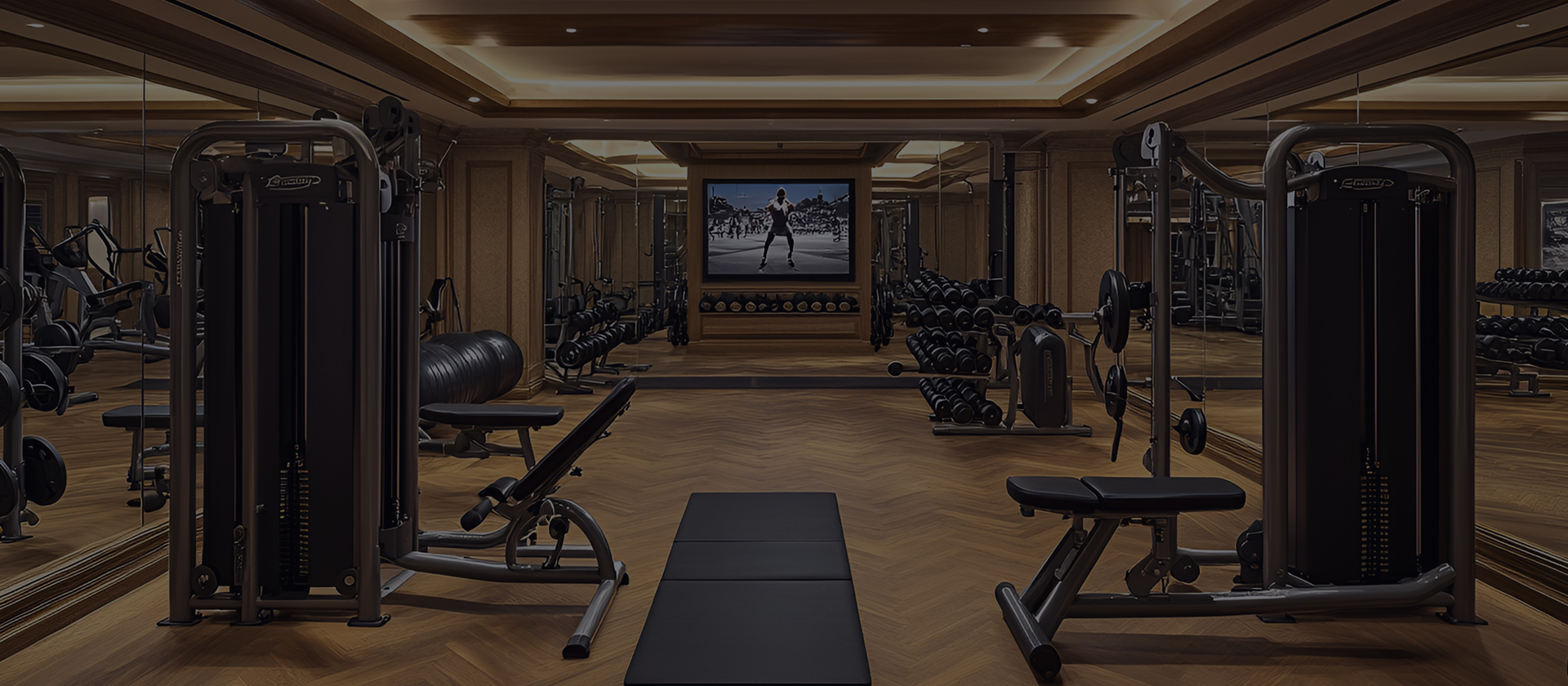
The placement of fitness equipment is by no means a random space layout, but a key link that affects the efficiency of gym operations, the safety and experience of athletes' training. Scientific and reasonable placement needs to take into account many factors, not only to ensure the safety and smoothness of the training process, but also to take into account the maintenance needs and convenience of the equipment. The following will sort out the key precautions for fitness equipment placement in detail from four core dimensions, and provide ideas for standardized and efficient equipment layout.
1. Reserve safety spacing and build a strong protective barrier
The principle of equipment placement is to reserve sufficient safety spacing, which is the basis for avoiding collisions in training. Different types of fitness equipment require different activity spaces during operation, and the distance between adjacent equipment should be reasonably planned according to the movement trajectory and use mode of the equipment, and at the same time maintain a safe distance from fixed structures such as walls and columns. Avoid stacking equipment densely or placing it close to each other to prevent athletes from colliding with others or equipment when stretching, turning or getting up during training, and create an independent and safe training space for each athlete.
2. Place according to functional partitions to improve training efficiency
Zoning and placing fitness equipment according to functional attributes can make the space layout clearer and improve the training efficiency of athletes. According to the functional category of the equipment, different areas such as aerobic training area, strength training area, and auxiliary training area can be divided, and equipment with similar functions can be placed in a centralized manner. This layout not only facilitates athletes to quickly find the equipment they need according to their own training plan, reducing the back-and-forth between different areas, but also avoids interference between trainers of different types of equipment, making the overall training order more orderly.
3. Adapt to environmental conditions and help equipment maintenance
The placement of equipment should adapt to the environmental conditions of the site, create favorable conditions for equipment maintenance, and extend the service life of the equipment. Avoid placing equipment in areas with direct sunlight, humidity and darkness, or poor ventilation to prevent problems such as rust, aging, and circuit failure due to environmental factors. For heavy equipment that requires stable support, it should be placed in an area with sufficient ground load-bearing capacity to avoid affecting the stability of the equipment due to ground settlement or shaking. At the same time, the daily maintenance needs of the equipment should be considered when placed, and a space should be reserved for easy maintenance and cleaning by staff.
4. Follow ergonomics and adapt to training behavioral habits
The placement of equipment should follow the ergonomic principle, fit the training habits of athletes, and improve the convenience of use. For equipment that needs to be used continuously or together, the distance between the two should be shortened to reduce the inconvenience of the athlete's round-trip movement. Place equipment that is less difficult to operate and more frequently used in an easily accessible area to lower the threshold for use. At the same time, the height and angle of the equipment should be adapted to the body proportions of most athletes, so as to avoid posture deformation during training due to improper placement, which not only affects the training effect, but also increases the risk of injury, so that the use of equipment is more in line with the natural movement trajectory of the human body.
All in all, fitness equipment placement is a systematic work that requires comprehensive consideration of safety, efficiency, maintenance and adaptability. Following the principles of reserving safety spacing, zoning according to function, adapting to environmental maintenance, and fit ergonomics, it can not only create a safe, comfortable and convenient training environment for athletes, but also extend the service life of equipment and improve the space utilization rate of the gym. Only by doing a good job in the detailed planning of equipment placement can the operation of the gym be more standardized and lay a solid foundation for the fitness journey of athletes.




 Chinese